Table of Contents
My entire music library is MP3s
I was reminded about this when I wrote my article Be more cultured with an offline music library , but since around December last year, I’ve kept my music library limited to MP3s only. There’s no underlying philosphy behind this, but it’s literally just that I don’t think I can tell the difference between MP3s and FLACs. Now there are a few variables here, such as my audio gear not being particularly hifi or that the FLACs I had were low resolution FLACs, but I never really noticed a difference.
A decent chunk of my library was in FLACs, so I decided to convert them to MP3s. I do the highest resolution MP3s I can (320 kbps) - I can tell the difference between MP3 resolutions - and for any new albums I acquire or purchase, I’ll either convert the different format to MP3s or just get the MP3s directly. Maybe in the distant future when I get some really hifi audio equipment I’ll realise how crunchy MP3 320 kbps is, but for now, I’m content with this.
Workflow: adding new music to my library
I have a pretty well established workflow for adding new music to my library. I should automate it at this point since it’s so established, but I’m gonna leave that to my future self.
The first part is acquiring the music. I’m not going to disclose my sources, but assuming I’ve just purchased an album off of Bandcamp (which I do), here’s what follows:
- Convert the file format (if needed)
- On macOS, I use this app called Mediahuman Audio Converter . There’s no particular reason why I use this app specifically; I think it’s just the first one I found. It’s pretty simple to use though; you just put your music files in, select the output format, and convert them. It’ll put the output files in the same directory.
- The biggest hiccup I have here is that I manually delete the original files after doing that. There’s probably a setting or automation I can do though.

- After I’ve converted the files, I’ll tag them using Musicbrainz Picard .
- This tagging software plugs into the Musicbrainz database, and can tag your music using the releases there. I won’t lie; this software is a bit cumbersome, but past the initial setup, using this is very simple.
- All you really have to do is:
- put your new music files in
- click on the “cluster” button which will automatically categorise the songs into their respective album names (still untagged)
- click on the “lookup” button, which will find the appropriate release on Musicbrainz to tag your music with
- if “lookup” yields no results, you can then use the “scan” button which (I believe) matches the waveform of the songs with releases on Musicbrainz and uses that information to find an appropriate release
- Adjust the tags/album art if needed
- Click on “save” to add it to your music library folder
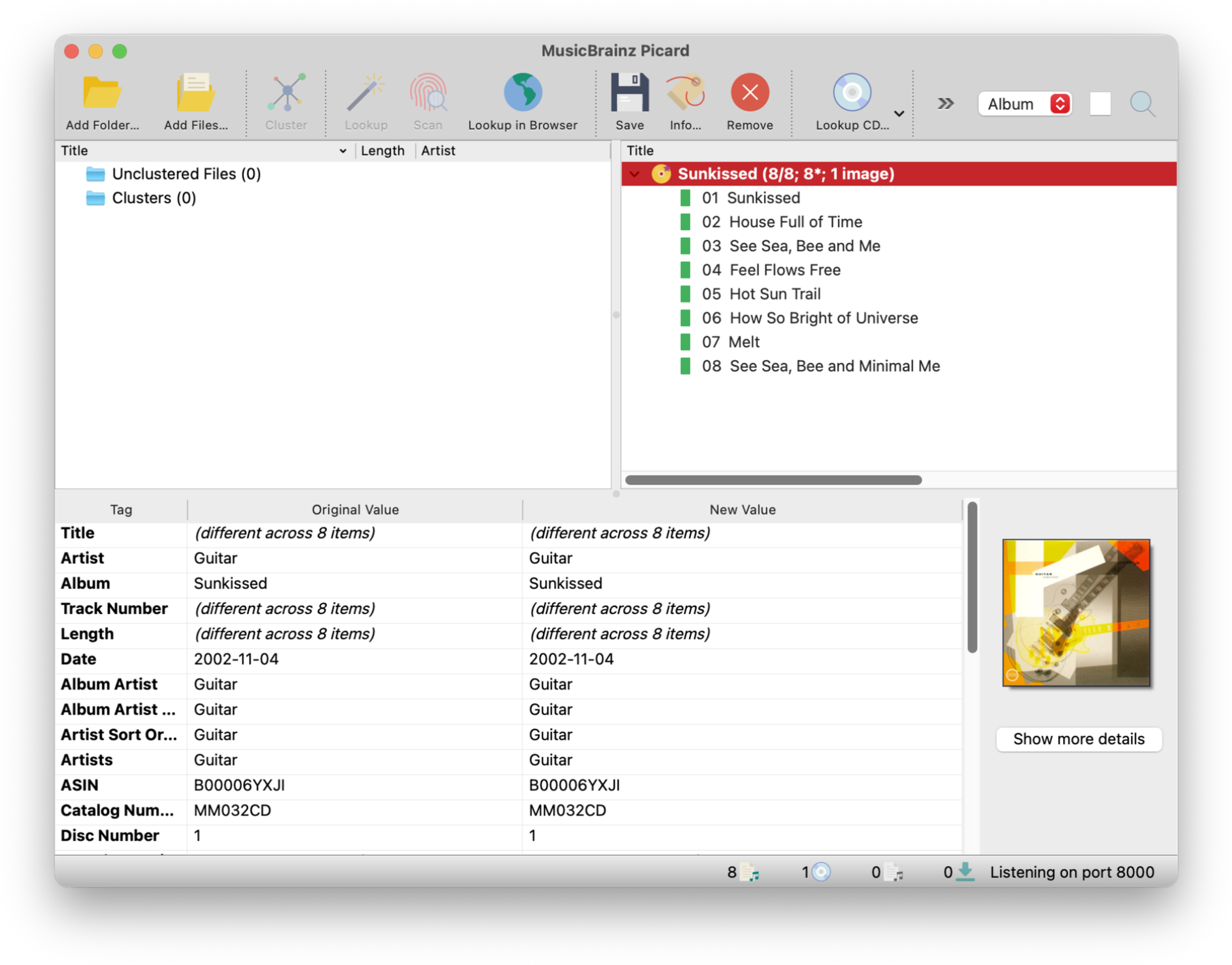 OP album, btw
- The most finicky part of the setup of this app is getting it to name your files how you want to; the trick is that the output filename is combined with the path to your music library. That, and also they use their own syntax to write the file naming script. This is what that window looks like:
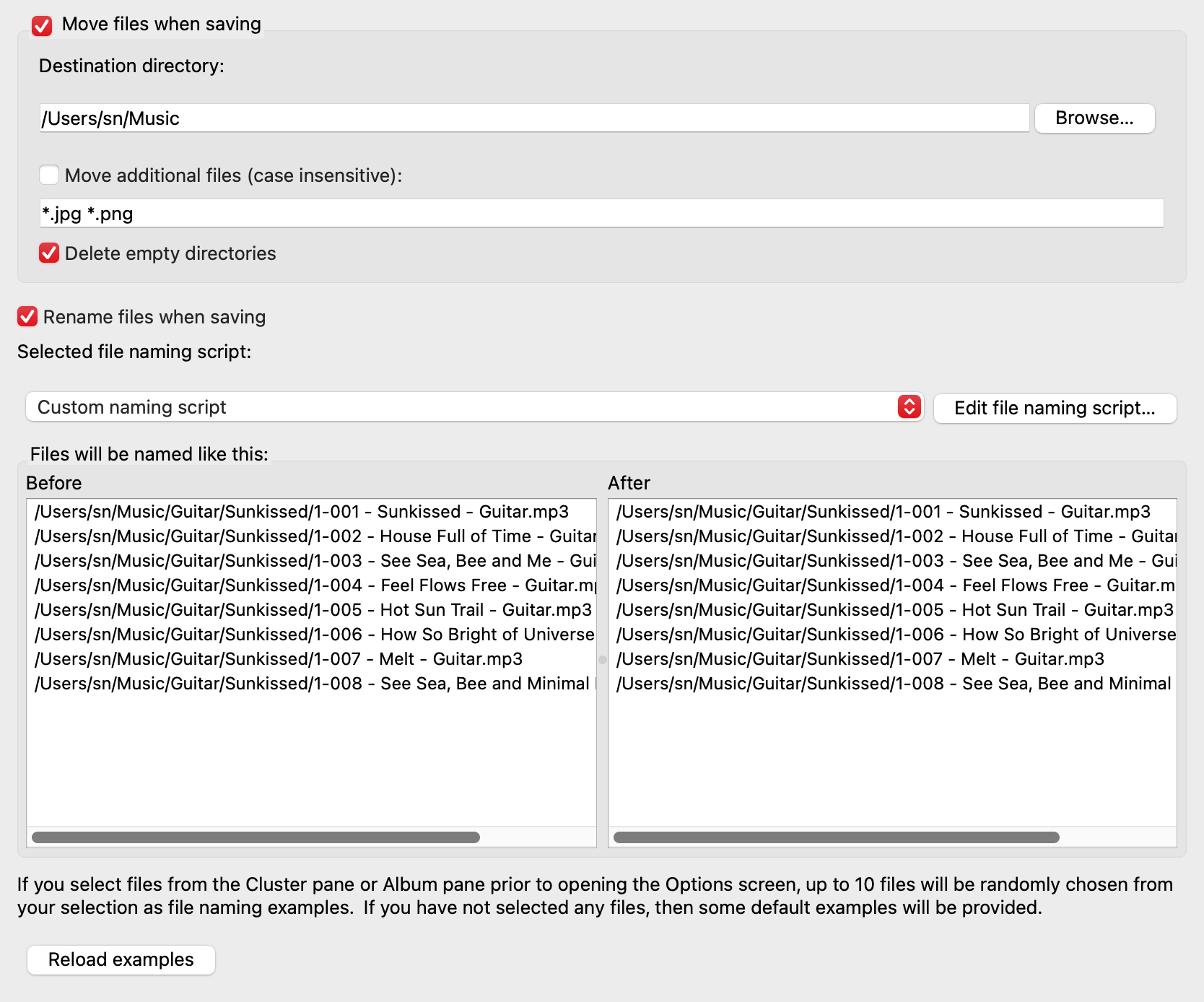
- And this is my file naming script:
Musicbrainz Picard file renaming script 1%albumartist%/%album%/%discnumber%-$num(%tracknumber%, 3) - %title% - %artist%- You’ll probably have to break out the documentation to figure out the specifics.
- Then, since I use the Apple Music app, I’ll manually update my library due to how I have it set up.
Something I miss from Linux
It randomly occurred to me but there’s a feature in pretty much all Linux desktop environments and window managers that is sorely missing on macOS. That’s the ability to easily resize windows by holding down Super/Command/Windows and right click dragging in whatever direction you want to resize; along with the ability to press those same buttons and left click drag to move windows around. It makes floating window management super fast.
How I’m playing video games
I’m in a bit of a rut with video games and find it rather difficult nowadays to complete any. I mentioned before, but I’ve abandoned quite a few games recently just because they aren’t clicking with me in that moment in time; these are objectively good games, but I don’t find myself clicking with them.
One thing I’m letting myself do now is, in order to get that momentum of finishing games going, is to let myself skip out on side quests or not bother with them at all and just focus on the main story line. More so in open world games, like Skyrim or Sleeping Dogs, where the side quest content is abundant. I make an exception with Skyrim though, since the side content there is pretty much the whole point of that game. I’m accepting that progress will be slow there, and I’m going to be taking many breaks from it. I’ll probably end up finishing it in a few years time, and I’m fine with that.
I started Skyrim back in March, and since then I’ve logged about 35 hours (which feels less than it should be) with some breaks in between lasting months. I went back to it for a few days this week, and the last time I played it was around June I think.
But going back to the point, in order to get that momentum going, I’ll just focus on main quests in the games I play. I’ll go back to them if I want to later on, or if I’m really jiving with the game then I’ll do the side content, but I really want to get that completionist mindset out of me. I’ve never been a completionist, but I find myself thinking that I’m wasting the entire game if I don’t do any side content. That leads to me sometimes forcing myself to do side content and hence burning out on the game entirely.
I think this sort of mindset got to me because of a lot of online communities with these games. Going back to Skyrim, when watching some video guides or online discussions about it, I come across people who say they’ve played through the main campaign 50 times and have logged 4000 hours (exaggeration, of course). But looking at those figures at comparing them to my poultry 35 hours, I feel like I’m not maximising the game as I “should” be doing. I think that’s part of the reason I’m in this rut with video games; I’m at the point where I sometimes find myself liking the idea of gaming more than actually gaming.
Comparison is the thief of joy, as they say.
Low information diet
This kind of trails from the previous section, but an idea I came across from an audiobook I’m listening to this week (The 4 Hour Work Week (LOL) by Tim Ferriss) is the idea of a “low information diet”. It’s pretty much what it sounds like, and what he says about it is to have close to zero intake of news and “information” (whatever that entails for you).
Now, I don’t agree entirely with how far he suggests going, but I understand the general idea with my current context. Being aware of the news, in my opinion, does help; because sometimes, there are events in the world you can have an impact on, in whatever capacity. The BDS movement is a good example of this. I can’t directly influence the genocide in Palestine, but I can, in some limited capacity, try to help because I know what’s going on there. Now beyond that, when I find myself starting to go very deep into the specifics of the events, namely things such as specific crimes being perpetrated there (I’m not including information about better understanding the situation); that’s when I think there isn’t much value to knowing these things whatsoever. If I haven’t worded this properly; let me know, but I hope you can get the general gist of what I’m saying.
Having a lot of information in your mind that you can’t do anything with quietly usurps your energy. Going back to what I said about video games, knowing that people are logging 4000 hours in Skyrim takes energy away from my own ability to enjoy that game.
I’m lucky I find myself rather alienated from doomscrolling anyways these days, so just reducing my information intake shouldn’t be too hard. I’m not going on a complete media blackout, but the gist is just reducing my information intake.
Feel Good Productivity by Ali Abdaal
I’m getting back into the productivity rabbit-hole again. I used to follow Ali Abdaal back in 2020, but I did find myself getting a bit alienated from him around 2021 because he did seem to venture into the negative productivity bro realm. But just out of curiosity, I decided to listen to the audiobook version of his book, and I quite like it actually!
He seems to have chilled out a bit on the relentless productivity front, and says quite a few things I never would have expected coming from him. There’s a whole section in this book about resting properly, and even about doing nothing. But in general, the main theme of this book is about making the things we do more enjoyable; including more mundane tasks. This is done through making the tasks themselves more enjoyable, such as doing them with “energising” friends or by putting on background music. Things of that nature. This is also done by being able to properly rest, and actually working to improve the things we do to rest. He suggests things like the aforementioned doing nothing as a good way to recharge.
I’d like to write an article on my takeaways from this book, but because I listened to the audiobook, I didn’t take any notes on it. I’ve since learned that there are ways to take notes from audiobooks, which I’m going to try out. I’ll probably come back to this book in a while and take notes on it, which I’ll then share here.
Understanding general ideas as opposed to specifics
This is something I’m working on and have gotten better at. I think negative aspect of my culture is taking ideas at face value. This is something I unconsciously did for quite a while, and I’m working on undoing that. Like I mentioned with the low information diet, a few years ago I probably would have outright dismissed the idea by taking it at face value. Now, I find myself being able to better understand the idea behind the words and see if that aligns with me. I think just sitting with ideas you disagree with is a good way to do this. Also like I mentioned with Ali Abdaal; I turned myself off of him because I was taking a lot of his words at face value, but nowadays, by trying to understand the gist of what he says, at least within the realm of productivity, he has a fair amount of solid advice.
Video content on this blog
This is something I’ve done a bit more over the past 2 weeks. I think something I’m going to try to do is, aside from weeknotes, make a video version of most of the articles I write. The main motivation behind doing this is to just get comfortable speaking in front of a camera, work on my body language/eye contact when speaking, and work on slowing down my rate of speech and hence fix my stuttering.
Speaking too fast is something I’ve done for a while; I’ve broadly slowed down over the past few years, but I do find myself choking on my words a decent amount nowadays even. It’s not very fun when that happens, so this is my way of working on it.
You’ll also notice, if you watch them, that there’s minimal editing. For now, I’m just putting the title of the video/article and maybe background music, but I don’t want to remove any minor stutters or make any cuts, partly to keep the videos somewhat relatable. Right now, I record my videos in a few (1 to 5) continuous takes; it’s not an efficient way of recording videos, but the main goal behind this is to be able to properly articulate what I’m trying to say in one go. We don’t get to cut up our words in real life now, do we? I’m also not focusing too much on video quality and lighting. I’m trying to get the bias to action working with these videos, and by not fussing too much on those things right now, I’ll be able to more easily churn out videos.
But, through this practice, I’ll get better at video editing too! By merging my article and video content pipelines (so fancy), I have a certain way to consistently make videos without thinking too hard about the content. As they say anyway; the first 50 videos you post online are trash anyway, so I’ll try to get them out of the way like this. After that, I’ll see how I should continue video content.
Is increasing the reach of this blog part of this scheme? Partly. If I really wanted to optimise for reach, then there are a bunch of things I should do that I don’t want to do with this blog specifically. That primarily includes focusing on a specific niche; that’s not the point of this blog. But hopefully with what I learn from doing this, I have the option to make a separate thing on specific niches. It’ll keep the door open for other options in the future.
Journaling
For this week at least, I’ve kept up my journaling habit! I’ve wrote something daily, I think usually about 500 or so words. Some days was a bit lower, around 100 or so, and yesterday I just did 2 sentences, but I’m happy I kept the habit at all!
Conclusion
That’s it for this week. Thanks for reading!
Comments?
If you have any thoughts about this post, feel free to get in touch!